

Walking with Pope Leo during Easter, Episode 4
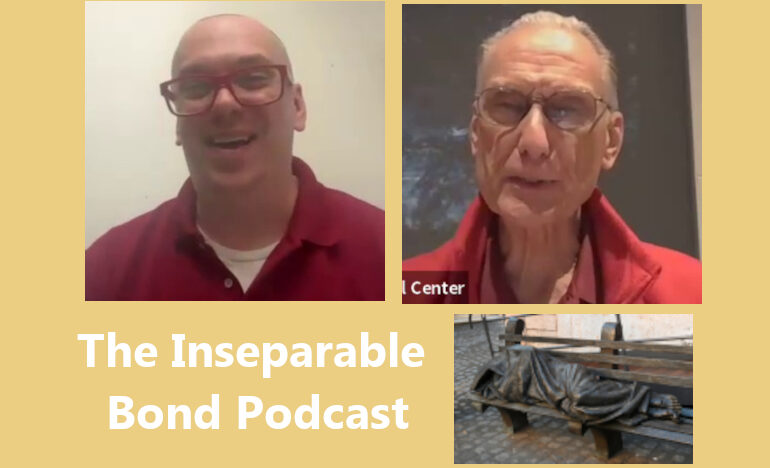
The Inseparable Bond Podcast: “Ask Their Name”
With Fr. Ron Will, CPPS
“We have to state, without mincing words, that there is an inseparable bond between our faith and the poor.”
—”I Have Love You,” the apostolic letter of Pope Leo XIV
In his letter Dilexi Te (I Have Loved You). Pope Leo XIV sets forth a bold agenda for the Church’s action in the world. Leo reminds us that to be Catholic means to love the poor. Many of us may never really have learned that, but it is definitely part of our Catholic teaching. Love for the poor is not an option.
God loves all of us, but God’s heart goes out to the poor. God hears the cry of the poor, and now God responds to that cry through you and me. We are members of the body of Christ, and so Christ acts through his members.
During this Easter season. I wish to pray with you for the coming of the Holy Spirit this year to inspire and energize you and me to love those whom God loves in a special way. In this series, we are meeting individuals who are trying to take that command seriously and apply it to their personal lives and in their parish lives. We will learn ideas about how we ourselves might do something similar in our own circles of influence.
In Episode 4, Fr. Ron talks with Jason Roberts about how the call to accompany the poor and the immigrant is a call to recognize their God-given dignity. We call the episode: “Ask Their Name.”
Watch the video to hear the full interview. Here are excerpts from Episode 4:
Fr. Ron Will: Today I am visiting with Jason Roberts from Holy Family Parish in Kansas City, Missouri. Jason, thank you for joining me and sharing your ideas. Today you read Pope Leo’s apostolic letter along with several of us during the season of Lent. You shared with me that the letter nudged you to go back to traditional easy things to do. Can you begin to share some of those ideas with us?
Jason Roberts: Sure. One of the things that Pope Leo challenges us to do is to really meet people where they are and to embrace them in their situation, kind of like Pope Francis asked us to do. Go to the peripheries and find the people out there that may feel like outcasts or left out of the church or in some way abandoned by the church for whatever reason that has brought them to that conclusion and that feeling. But those feelings are valid.
I think sometimes as human beings, we reinvent the wheel all the time and we forget the simple things that we can do as people because we feel like, well, that’s already been done, so I’ve gotta do something else. Or why would I do what they’re doing? Because they’re already doing it. But the reality is it’s the simple things that really work for the poor. Those are just a means of encounter, a means of listening. The Dominican South America priest Gustavo Gutierrez said, “So you say you love the poor? Name them. Can we name the poor or are the poor just those people?
And do we otherize the poor? One of the first things we have to do is stop otherizing them. They’re not those people, those kids. They are God’s children. They are human beings. They are brothers and sisters. At a conference I attended with the Precious Blood Spirituality Institute, a Viatorian brother challenged us to stop talking about immigrants as “the stranger” and instead to talk about them as “the neighbor,” particularly because we teach children about “stranger danger” and strangers are bad. Yet we call immigrants living around us to whom we’re supposed to be ministering “the stranger.” Catholic social teaching calls them the stranger, to welcome the stranger. His challenge to us was, let’s stop talking about welcoming the stranger, and instead, let’s welcome the neighbor. Let’s welcome our brothers and sisters. Simple vocabulary changesr eally make a difference. …
Fr. Ron Will: Several things that you’ve said already strike me. One is knowing their name. And I know some of us go to places like food kitchens or food pantries where we serve people who are hungry and needy, but it’s easy to become some kind of a mechanical robot handing out food, but to, to name them or to sit down with people at the tables and just ask their name or tell me a little bit about yourself. That’s real dignity.
Jason Roberts: It is.
Fr. Ron Will: And that’s easy. Well, maybe it’s not so easy. It’s sometimes that makes me uncomfortable, but it’s dignified love
Jason Roberts: We’re called as Catholics to honor human dignity, to see the dignity of the human being. And, you know, we have infinite human dignity. You know, everyone has a story. Everybody has a story, and we often listen to the stories of people who have positions and titles. We listen to vocation stories from priests and nuns and brothers, and we listen to the stories of CEOs who “pulled themselves up from their bootstraps” and now they’re billionaires, but we don’t often readily listen to the stories of those who are lowly
Fr. Ron Will: You’re right about that.
Jason Roberts: W go to the soup kitchen and we throw some food on their tray and say, well, I’ve done a good thing. I’ve fed the hungry. I did my Catholic work of mercy, but what if there were people sitting at tables that weren’t serving food, or that when we were done serving food, we went to the tables and talked with them and said, tell me a little bit about yourself. …
We have an opportunity to listen and to make someone feel important. And if, if we can do that for someone, making them feel important, helping them to realize that they have a God-given dignity, we have lived out the Precious Blood charisms of hospitality and reconciliation. …
Fr. Ron Will: I like that. Tell me about yourself and just listen. That’s giving honor, dignity to the person, and that doesn’t take any training. I don’t have to go to get a degree or a special certification to help a poor person.
Jason Roberts: I think about a quote from St. Maria de Mathias who said, the reformation of a society begins with the heart of the person, and a person is transformed when they come to understand how precious each person is in the eyes of God.
Fr. Ron Will: Yes.
Jason Roberts: Going back to Gustavo Gutierrez, “you say you love the poor, name them.” Maria de Mathias says, our hearts are changed when we live out the Precious Blood spirituality. Our hearts change. We are reconciled, we are hospitable, when we allow ourselves to see that other person as precious in God’s eyes, just like we want to be.
Fr. Ron Will: And we allow them to feel precious in God’s eyes, because first they’re precious in my eyes.
Some Background
This series grew out of a study group Fr. Ron led during Lent reading Leo’s apostolic letter. Inspired by discussion during these study sessions, Fr. Ron wanted to have deeper conversations on themes and ideas the group brought up.
Pope Leo’s letter is itself a response to Pope Francis’ last encyclical letter, “Dilexit Nos” (I Have Loved You), which was a moving mystical mediation on the Sacred Heart of Jesus and God’s immeasurable, inexhaustible love of all creation, especially the least among us.
During this Easter Season, let’s pray together for the coming of the Holy Spirit to inspire and energize us to love those whom God loves.
Listen in every Tuesday during the Easter Season, leading up to the celebration of Pentecost.
All of the videos in this series can be found here: The Inseparable Bond Podcast
Never miss an article published on the Renewal Center website: Sign up to receive our newsletters.
[Fr. Ron Will, a Precious Blood priest and spiritual director, is a graduate of Catholic Theological Union and Creighton University’s School of Christian Spirituality. He has a special interest in helping form intentional disciples of Jesus, encouraging others to go spiritually deep-sea diving to explore a deeper relationship with God, and walking with people as they dive into the ocean of God’s mystery experiencing God rather than simply dipping one’s toe into the water.]
We encouraged you to read the apostolic letter. You can download a copy for free from the Vatican’s website or buy a copy at your favorite bookstore.
Learn more about “Dilexi Te” (I Have Loved You)
Photo Credit: ID 345998791 | Homeless Jesus © Bumbleedee | Dreamstime.com Music Credit: “Sail on Stranger” by Dan “Lebo” Lebowitz.
We’d Like to Hear from You!
We’d like to know what you think about this article. Send us a comment using the form below. Do you have a suggestion? Is there something you want to learn more about? Send us a note.
Related

Aging ain’t for wimps!
By Fr. Garry Richmeier, C.PP.S.
One of my mom’s favorite sayings was “Aging is not for wimps.” Aging is a piece of the human puzzle that many don’t like to talk or think about, because they fear the losses that come with it. We can’t stop the aging, but we can lessen the fear.
Take a Fall Prayer Walk with Fr. Ron
By Fr. Ron Will, CPPS
On the official first day of fall, I decided to make my daily walk a “prayer walk” and not just a walk for exercise. Join me on my walk and find inspiration for your own prayer walk, noticing God, by really paying attention to sights and sounds.