

Learning to Trust
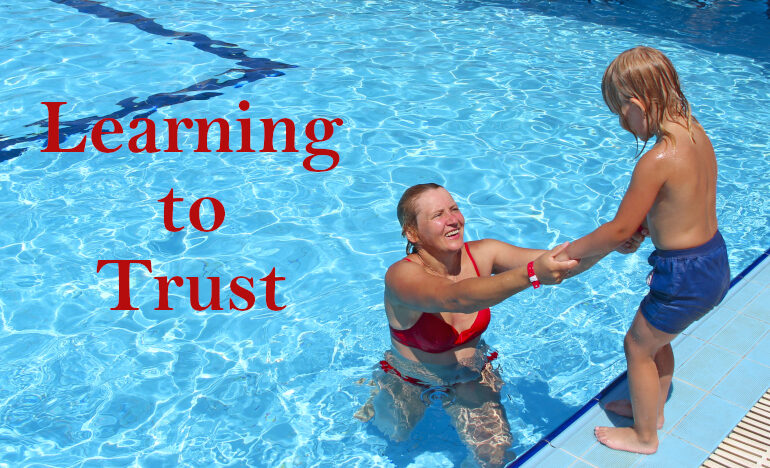
An Assembling God’s Puzzle video
By Fr. Garry Richmeier, C.PP.S.
Relationships are built on trust. Most everyone knows that. But it is also true that many people find that building trust, as well as recognizing who is trustworthy, is a challenge. Unless a person wants to go through life alone, trust is a necessary piece of the puzzle of being genuinely human.
There are two extremes when it comes to trusting others, and we do well to avoid both.
We see the first extreme in a person who trusts nobody. Such a person usually has a rather negative view of human beings. They may think that others are only concerned about themselves, and that people only help others to get what they want. Their view is that everyone has ulterior motives, so you can’t take what they say or do at face value. Such a person will have few close friends. And even those friends will be quickly “written off” if they are perceived to betray the person’s trust, even by mistake.
Of course, a person like this has come by this view honestly. Their trust has most likely been betrayed often in the past, and their skepticism about others is a way they protect themselves from further hurt. But it often results in a very lonely life.
The other extreme regarding trust is seen in a person who trusts everyone. This is the person who will believe the email they receive from a Nigerian prince who needs money, or who will take false flattery as genuine. Such a person may lack discernment skills when it comes to social behavior and keeps making the same mistake of trusting people who are untrustworthy.
Loneliness can also drive a person to trust unwisely. It is not uncommon for people to jump into relationships to avoid the pain of loneliness, and then discover their trust was misplaced. Posting everything about one’s life on social media is another way of misplacing trust.
Healthy trust lies somewhere between these two extremes. Here I’m reminded about Jesus’ admonition to be “wise as serpents and innocent as doves.” It is good to be “innocent” when it comes to trusting people in the sense of being open to the possibility that someone is trustworthy.
This has to be the starting point, otherwise there will be no possibility of trust. This requires a core attitude that people are basically good, although they make mistakes sometimes. This allows us to approach relationships with others with an openness to the possibility that the relationship can be mutually life-giving. This requires risk, and the courage to take the risk. There is no way around this if we want to be in relationship with others.
But being “wise as serpents” can help reduce the risk involved in relationships, and help us discern when and when not to risk trusting others. This means using all the information available to gauge someone’s trustworthiness. How someone has behaved in the past is important information. It is true that the best predictor of a person’s future behavior is their past behavior. People change, but if someone’s past behavior has been shown to be untrustworthy, more caution is warranted to decide if they have changed.
Taking time in developing relationships is also important. More time gives more opportunity to see if a person’s behavior is consistent or is just a temporary act. It is also important to see if a person’s actions match their words. People make mistakes sometimes and betray trust. Part of discerning if a person is trustworthy is distinguishing between a mistake of betraying trust and the habitual or intentional betrayal of trust. Again, this should become more obvious over time. It is important to take time in building a relationship if we want to be more certain that the person is trustworthy.
Trust is always a challenge. But without finding ways to do it, we doom ourselves to loneliness and isolation.
All of the videos in this series can be found here: Assembly God’s Puzzle.
Never miss an article published on the Renewal Center website: Sign up to receive our newsletters.
[Fr. Garry Richmeier, a Precious Blood priest and spiritual director, holds a Master’s of Divinity Degree from St John’s University in Collegeville, Minnesota, and a Master’s of Counseling Psychology degree from the University of Missouri-Kansas City. He is a licensed professional counselor and a licensed marriage and family therapist.]
Photo Credit ID 125496837 © Alexmak72427 | Dreamstime.com — Learning to Trust — An Assembling God’s Puzzle video
We’d Like to Hear from You!
We’d like to know what you think about this article. Send us a comment using the form below. Do you have a suggestion? Is there something you want to learn more about? Send us a note.
Related
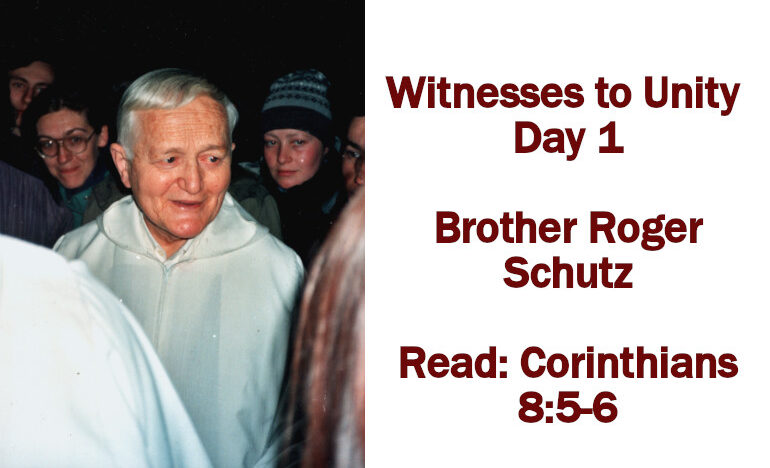
Witnesses to Unity. Day 1: Brother Roger Schutz
Brother Roger Schutz founded of an ecumenical community in the tiny village of Taizé, France, that grew into a global movement. He is our first Witness to Unity during this week of Prayer for Christian Unity, Jan. 18-25, sponsored by three Catholic spirituality centers in the Kansas City area: the Marillac Center in Leavenworth, Kansas, the Sophia Center in Atchison, Kansas and Precious Blood Renewal Center in Liberty, Missouri.

Practice, Practice, Practice
An Assembling God’s Puzzle video
By Fr. Garry Richmeier, C.PP.S.
Changing the way we think about something involves getting the brain neurons to send signals to different neurons, to start connecting to each other in different patterns. This is where practice comes in.